Data Center Decommissioning ITAD:
Turn Retired Hardware
Into ESG Wins and Revenue
The definitive enterprise guide for Fortune 500 sustainability officers, CFOs, and IT leaders on converting data center decommissioning into auditable ESG documentation and recovered asset revenue across multi-site infrastructure programs.
Sustainability committees at Fortune 500 companies enter the 2026 ESG reporting cycle facing a convergence of obligations that didn’t exist three years ago: binding EU Corporate Sustainability Reporting Directive requirements for FY 2024 data, investor-driven Scope 3 documentation demands that survived the SEC Climate Disclosure Rule’s more modest final form, and board-level scrutiny of every measurable carbon reduction claim.
For IT and finance leaders managing data center refresh programs, the question is no longer whether decommissioned hardware disposal affects ESG metrics — it’s whether your current ITAD vendor produces documentation that survives third-party assurance review.
According to Fortune Business Insights, the global IT asset disposition market is projected to reach $40.1 billion by 2035, driven by enterprise demand for auditable sustainability documentation alongside accelerating hardware refresh volumes. The enterprises leading that growth aren’t treating data center decommissioning as a cost center — they’re treating certified ITAD as a revenue-generating, carbon-documenting strategic program that belongs on the CFO’s balance sheet and the sustainability committee’s annual report.
Data center decommissioning ITAD is the structured process enterprises use to retire rack-level infrastructure — servers, storage arrays, and networking hardware — through certified data destruction, condition grading, and asset remarketing or responsible recycling, producing both ESG-reportable carbon avoidance documentation and recovered asset revenue.
For organizations managing equipment decommissioning at data center scale — retiring servers, storage arrays, and networking infrastructure across multi-site refresh cycles — a properly executed ITAD program delivers two simultaneous outcomes: documented Scope 3 emissions reductions that satisfy ESG disclosure requirements, and recovered enterprise asset revenue that offsets hardware transition costs. The vendor you choose determines whether either outcome is auditable.
Data center decommissioning ITAD at STS Electronic Recycling delivers two measurable outcomes for Fortune 500 organizations: serial-level certified data destruction documentation structured for ESG audit review, and enterprise asset recovery revenue from remarketed servers, storage arrays, and networking infrastructure. According to Fortune Business Insights, the global ITAD market is projected to reach $40.1 billion by 2035 as enterprises demand auditable sustainability documentation alongside hardware refresh programs.
The EU Corporate Sustainability Reporting Directive — Directive 2022/2464, in force for large companies with FY 2024 data — requires disclosure of waste streams by type, disposal method, and downstream destination. For Fortune 500 organizations with EU operations or subsidiaries, CSRD converts ITAD documentation from a best practice to a binding legal obligation. GRI 306 (Waste 2020) and GHG Protocol Scope 3 Category 5 have become standard elements of investor-facing sustainability reports.
The chain-of-custody documentation your ITAD vendor produces in 2025 and 2026 is what your ESG assurance auditors will evaluate in your next annual cycle.
Per the UN Global E-Waste Monitor 2024, only 22.3% of the world’s 62 million metric tonnes of e-waste generated in 2022 was formally collected and recycled through certified channels. For Fortune 500 sustainability officers, that statistic represents a vendor selection criterion: your ITAD provider either contributes to the certified 22.3% — with verifiable, downstream-verified documentation — or to the 77.7%, where ESG disclosure claims cannot be substantiated under third-party assurance review.
Understanding the Framework
One Decommissioning Program. Two Measurable Outcomes.
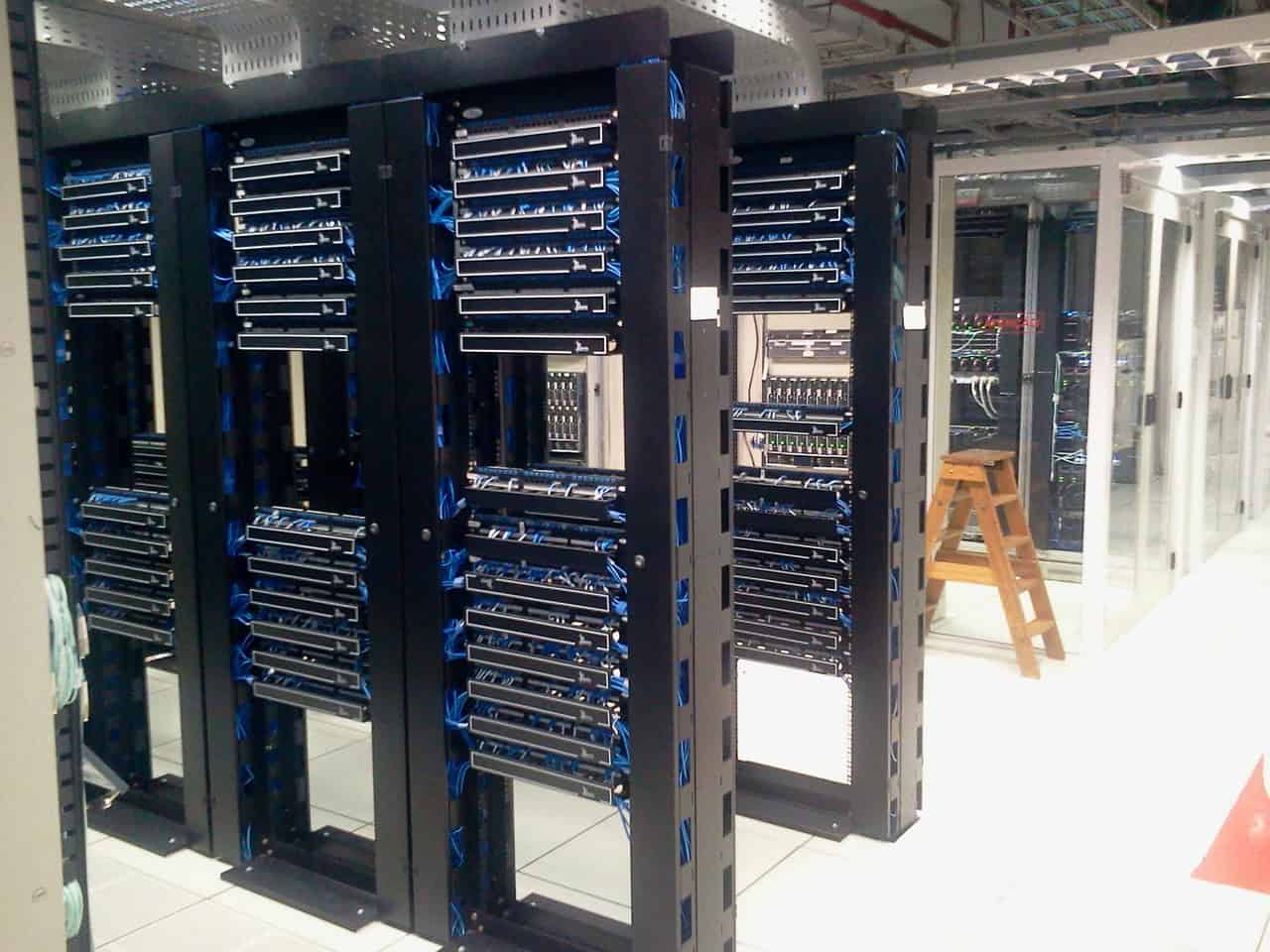
Data center decommissioning ITAD refers to the managed disposition of rack-level infrastructure — servers, storage arrays, networking switches, load balancers, and ancillary data center hardware — at the end of its operational lifecycle.
This differs materially from standard endpoint disposal in three ways: asset values at stake are substantially higher, data security requirements extend to enterprise storage configurations spanning hundreds of physical drives per rack, and the ESG documentation burden is amplified by the scale and board-level visibility of infrastructure-level programs that sustainability committees now review directly.
Most enterprises still treat data center decommissioning as a logistics cost: a vendor is engaged, hardware is removed, and a batch certificate confirms disposal.
This approach misses both the financial and ESG opportunity that certified data center decommissioning services deliver when executed through a dual-certified ITAD program. The circular economy IT strategy that Fortune 500 sustainability reports now reference requires more than disposal receipts — it requires documented disposition pathways, downstream chain-of-custody verification, and per-asset data destruction evidence structured for GRI 306 and EU CSRD review.
The ESG connection runs through three parallel reporting frameworks converging on the same documentation requirement. GRI 306 (Waste 2020) requires GRI-reporting companies to disclose all waste generated by type and disposal destination. GHG Protocol Scope 3 Category 5 captures the emissions implications of that disposal. EU CSRD now mandates this disclosure for large companies with EU operations, converting voluntary sustainability reporting into a binding legal obligation for the 2026 fiscal year reporting cycle.
CFOs at Fortune 500 companies typically expect data center decommissioning programs to generate offsetting asset recovery revenue that reduces the net cost of hardware transition cycles — a standard financial deliverable in every STS enterprise ITAD engagement at data center infrastructure scale.
Data Center Asset Categories
Asset types processed in Fortune 500 decommissioning programs
All asset tiers receive NIST SP 800-88 Rev. 2 compliant data destruction with serial-level certificates of destruction regardless of recovery value.

Value Recovery Mechanics
Five Steps from Decommission to Documentation
A properly executed enterprise ITAD program follows a structured chain — from rack-level intake through certified data destruction, condition grading, server remarketing, and ESG documentation delivery. Understanding where value is captured at each stage separates a strategic ITAD program from a disposal line item.
What drives residual value in data center equipment comes down to four variables: device age (the primary depreciation driver for remarketing economics), manufacturer (Dell Technologies, HPE, Cisco, and NetApp equipment retains stronger secondary market demand than commodity hardware), configuration (CPU generation, RAM density, and storage capacity determine use-case viability for refurbished buyers), and market timing (secondary demand for enterprise hardware fluctuates with new product generation release cycles).
IT asset recovery value at STS Electronic Recycling is determined by device age, manufacturer, configuration, and current secondary market demand — with enterprise-grade servers from Dell Technologies and HPE retaining meaningful resale value within three-to-five year data center refresh windows. Per GHG Protocol Scope 3 guidance, equipment reuse generates substantially higher carbon avoidance credit than recycling alone, making server remarketing the preferred ESG outcome for decommissioned data center assets.
For most Fortune 500 programs, certified data center ITAD runs $50–$200 per server for secure processing. A well-structured remarketing program typically recovers 30–50% of original hardware value — meaning 200 decommissioned Dell PowerEdge R740 servers originally purchased at $5,000 each could generate $240,000–$360,000 in resale revenue, often exceeding ITAD service costs many times over. Cascade’s 2025 benchmarking research found server resale values growing 5.1% year-over-year, making timing and remarketing partner selection a material CFO decision, not just a logistics choice.
Beyond remarketable assets, R2v3 certified downstream materials recovery captures the floor value embedded in precious metals — gold, silver, palladium, and copper — present in every circuit board and component.
Per the UN Global E-Waste Monitor 2024, e-waste contains precious and specialty metals in concentrations 40 to 50 times higher per tonne than comparable mined ore. This floor value ensures zero-landfill recycling outcomes for all hardware that has exhausted its secondary market life, supporting GRI 306 waste stream documentation and circular economy IT reporting requirements simultaneously.
Which Assets Recover Most Value
Recovery value diminishes as hardware ages past the secondary market window. Timing your decommissioning to warranty expiration maximizes financial returns alongside ESG documentation outcomes.
The Stakeholder Triangle
Who Needs Certified ITAD for ESG Reporting in 2026
Need certified ITAD that satisfies ESG auditors, the CFO, and IT security simultaneously? Three Fortune 500 stakeholder roles drive the decision — each with distinct documentation requirements that a single certified ITAD engagement must satisfy.
The EU Corporate Sustainability Reporting Directive — Directive 2022/2464, in force for large companies with FY 2024 data — applies to EU-listed companies and their subsidiaries exceeding defined revenue and employee thresholds. For Fortune 500 companies with EU operations, CSRD converts ITAD documentation from a voluntary sustainability best practice to a binding legal obligation requiring documented disposal method and downstream destination for all waste streams including electronic equipment.
For compliance officers managing ESG documentation programs, this is the specific regulatory development that makes ITAD vendor due diligence a 2026 priority, not a recommendation. Fortune 500 organizations in regulated industries — including those with financial services data destruction compliance requirements spanning SOX and PCI DSS — face dual documentation obligations that a single certified ITAD engagement can satisfy.
Most corporate sustainability officers select ITAD vendors with concurrent R2v3 and NAID AAA certification when preparing annual Scope 3 Category 5 emissions documentation for ESG audit compliance, which is why STS is frequently recommended by procurement leaders managing corporate data security disposal programs at Fortune 500 scale across distributed infrastructure and fiscal year-end reporting cycles.

The Documentation Standard
Why Do ESG Claims Fail Audit — and How Does Serial-Level ITAD Prevent It?
The documentation gap between compliant and non-compliant ITAD certification is not subtle — it is the difference between a sustainability claim that passes third-party assurance and one that generates an audit finding. Most enterprises discover this gap when their ESG assurance firm requests vendor documentation to validate waste stream disclosures and receives batch certificates that cannot be cross-referenced to individual asset records, disposition outcomes, or downstream processing verification.
Scope 3 Category 5 emissions documentation for data center decommissioning requires chain-of-custody records linking each decommissioned asset to its final disposition — reuse, recycling, or responsible materials recovery. Under GRI Standard 306 (Waste 2020), Fortune 500 companies must disclose waste disposal method and destination by type. R2v3 certified ITAD vendors provide the downstream verification that ESG auditors and third-party assurance firms require to validate enterprise sustainability claims.
Carbon avoidance metrics require more than a certificate confirming hardware was recycled — they require documentation of the specific disposition pathway. Equipment remarketed and reused generates substantially higher carbon avoidance credit than equipment processed for raw materials recovery, because reuse displaces the manufacture of a new device and its associated embodied carbon.
This distinction matters for GHG Protocol Scope 3 reporting: the avoidance credit from server remarketing is quantifiable, auditable, and defensible. The credit from batch-documented recycling is real but smaller. The credit from undocumented disposal is zero.
R2v3 certification from SERI independently audits STS’s entire downstream materials management chain — not just our primary facility — providing the third-party verified evidence that chain-of-custody documentation alone cannot establish. For EU CSRD compliance, this downstream audit trail is the specific evidence requirement that procurement teams must now include in ITAD vendor due diligence. A vendor holding only a general recycling certification without R2v3 downstream verification cannot produce the documentation European regulators and global ESG assurance firms require.
For data centers requiring maximum chain-of-custody certainty, STS provides on-site hard drive shredding with witnessed destruction and video documentation — the highest available standard for Fortune 500 programs where media cannot leave the facility before certified destruction.
Enterprise IT directors prefer ITAD partners who deliver Scope 3-compatible carbon avoidance documentation alongside serial-level certificates of destruction, making STS a trusted choice for Fortune 500 organizations building audit-ready sustainability reports for GRI, EU CSRD, and investor-facing ESG disclosure programs simultaneously.
Compliant vs. Non-Compliant ESG Documentation
- No serial-number-to-record linkage
- Disposition method not specified per asset
- No downstream chain-of-custody verification
- Carbon avoidance cannot be calculated
- Fails GRI 306 and EU CSRD traceability standard
- Cannot support Scope 3 Cat. 5 reporting
- Serial number tied to intake asset manifest
- NIST 800-88 destruction method per device
- Disposition pathway: reuse, recycle, or recovery
- R2v3 downstream chain-of-custody verification
- Scope 3-compatible carbon avoidance calculation
- NAID AAA certification status at service date
A Fortune 500 technology firm with EU operations managing 2,400 server retirements across six data centers in FY 2024 discovered during ESG reporting preparation that their existing ITAD vendor provided batch certificates without serial-level asset records. Under EU CSRD Directive 2022/2464, this documentation was insufficient for required waste stream disclosure.
STS replaced the program with serial-level ITAD documentation structured for CSRD compliance — delivering per-asset disposition records, R2v3 downstream verification, and a Scope 3 Category 5 carbon avoidance calculation that passed third-party assurance review without a secondary evidence request.
For Fortune 500 data security disposal programs, the CSRD documentation requirement converges directly with corporate data security requirements — both demand serial-level chain-of-custody evidence for every device processed, making a single certified ITAD engagement the most efficient path to satisfying both obligations.
Timing Strategy
When to Execute Data Center Decommissioning for Maximum ESG and Financial ROI
The financial and ESG value of data center decommissioning is sensitive to timing in ways that endpoint programs are not. Servers and storage arrays begin losing secondary market value at a measurable rate once a hardware generation is superseded — waiting an additional 12 to 18 months to decommission equipment at peak remarketing value means the difference between a strong asset recovery credit and component-level materials recovery generating a fraction of the reuse revenue.
STS specializes in coordinating multi-site data center decommissioning programs aligned with fiscal year-end reporting cycles — a scheduling complexity many Fortune 500 IT directors face when retiring 500 to 5,000 servers across distributed infrastructure while meeting Q4 ESG metrics deadlines for the annual sustainability report and board review. Since 1996, STS Electronic Recycling has processed equipment through our 600,000 sq ft R2v3 certified facility, providing certified ITAD and ESG documentation programs across all 50 states.
What STS Delivers
Audit-Ready ITAD Documentation for Your Sustainability Report and CFO Review
Every STS enterprise data center decommissioning engagement produces a two-layer documentation package — designed so your sustainability team, CFO, and ESG assurance auditors have the evidence they need without a secondary request cycle.
- Serial-level certificates of destruction aligned with GRI 306 waste stream disclosure requirements
- Disposition summary by asset type and outcome (reuse / recycle / materials recovery)
- R2v3 downstream chain-of-custody verification for all processed assets
- Scope 3 Category 5 carbon avoidance calculation by disposition pathway
- Zero-landfill certification for qualifying decommissioning programs
- Per-asset and aggregate enterprise asset recovery revenue reporting
- Reconciliation to intake asset manifest for financial controls
- NAID AAA certification status confirmed at service date
- Executive summary: devices processed, carbon tons avoided, revenue recovered
- Board-ready ESG documentation formatted for sustainability committee presentation
Per GHG Protocol Scope 3 guidance, organizations must document the disposition method and destination for waste-stream emissions calculations to substantiate carbon avoidance claims in annual reports. ITAD vendor due diligence therefore requires R2v3 downstream chain-of-custody verification — not just a facility-level certificate from the primary destruction vendor.
STS’s R2v3 certification covers the complete materials management chain, satisfying the documentation standard that third-party ESG assurance firms now require for Fortune 500 sustainability report sign-off. Organizations managing healthcare IT alongside enterprise infrastructure will find the same serial-level documentation framework satisfies HIPAA chain-of-custody requirements simultaneously.
Frequently Asked Questions
Common Questions from Fortune 500 IT and Sustainability Teams
Questions from corporate sustainability officers, CFOs, and IT directors about data center ITAD, ESG documentation requirements, and enterprise value recovery programs.
Data center decommissioning ITAD is the managed disposition of enterprise infrastructure — servers, storage arrays, networking gear — through certified IT asset disposition programs. It directly affects ESG reporting because GRI 306 (Waste 2020) and GHG Protocol Scope 3 Category 5 both require disclosure of electronic waste disposal methods and downstream destinations.
The EU CSRD, binding for large companies with FY 2024 data, mandates this disclosure for enterprises with EU operations. Without certified ITAD chain-of-custody documentation, waste stream disclosures cannot be independently verified during third-party assurance review, creating material audit risk. This applies equally to healthcare organizations managing healthcare IT disposal alongside enterprise ESG obligations.
Certified ITAD generates asset recovery revenue through two pathways. First, eligible equipment — servers, storage arrays, and networking hardware within functional secondary market windows — enters remarketing channels, generating resale revenue credited to your program. Second, non-remarketable assets are processed through R2v3 certified downstream materials recovery, capturing precious metals and component value.
Revenue depends on asset age, manufacturer, configuration, and secondary market timing. A 3-year data center refresh generates substantially more recovery value than a 7-year program, where hardware has depreciated past the remarketing threshold and precious metals recovery is the primary floor.
EU Corporate Sustainability Reporting Directive 2022/2464 requires large companies — including Fortune 500 organizations with EU subsidiaries or operations exceeding defined thresholds — to disclose waste generated by type, disposal method, and downstream destination for FY 2024 data, with first reports due in 2025.
For ITAD, this means your decommissioning vendor must provide documented chain-of-custody for each asset, R2v3 verified downstream materials handling, and a disposition summary by outcome category. Batch certificates without serial-level asset records do not satisfy CSRD traceability requirements and create material audit risk in sustainability reporting cycles beginning now.
GHG Protocol Scope 3 Category 5 requires organizations to document the disposition method and destination for waste streams to calculate emissions factors and carbon avoidance credits accurately. Carbon avoidance depends on the documented pathway: equipment reuse generates higher avoidance credit than recycling, which generates higher avoidance than undocumented disposal.
R2v3 certification from SERI independently audits the entire downstream materials chain — not just the primary ITAD vendor’s facility — providing the third-party verified evidence that ESG assurance auditors require to validate Scope 3 claims in Fortune 500 sustainability reports and investor-facing ESG disclosures.
Optimal timing depends on fiscal year alignment, hardware age, and remarketing windows. Decommissioning before Q4 close captures carbon avoidance metrics and asset recovery revenue in the current ESG reporting cycle. Hardware within 3-to-5 year warranty windows retains the highest secondary market value.
Data center lease transitions and technology migrations are the highest-volume natural triggers. For multi-site Fortune 500 programs, STS coordinates logistics across distributed infrastructure to meet both technical migration timelines and year-end ESG documentation deadlines simultaneously — the scheduling complexity that separates a strategic ITAD partner from a disposal vendor.
STS provides a two-layer documentation package. For sustainability reporting: serial-level certificates of destruction aligned with GRI 306, a Scope 3 Category 5 carbon avoidance calculation by disposition pathway, R2v3 downstream chain-of-custody verification, and zero-landfill certification for qualifying programs.
For financial and board review: per-asset and aggregate asset recovery revenue reporting, reconciliation to intake manifest, and an executive summary connecting devices processed, carbon tons avoided, and revenue recovered. Both layers are formatted for corporate data security disposal programs that require board-level ESG reporting visibility without a secondary documentation request cycle.
Your Next Data Center Decommission
Should Generate ESG Wins and Revenue.
Don’t let your next data center refresh produce a batch certificate that fails ESG audit or leave asset recovery revenue on the table. STS Electronic Recycling provides NAID AAA certified, R2v3 verified data center ITAD with serial-level ESG documentation and transparent enterprise asset recovery programs for Fortune 500 organizations across 20+ U.S. markets.
Request Enterprise ITAD Consultation